


Do you want to know what is Pix? Here it is!
If you’ve been following the US-Brazil trade war, you’ve probably seen Pix mentioned in passing and moved on. That’s exactly the problem a new independent editorial site is trying to solve. But what is pix?
Whatispix.com launched as a single-page explainer aimed at international readers who keep hearing about Pix, Brazil’s government-run instant payment system, but have never had it properly explained to them. The site fills that gap with a clarity that most financial journalism hasn’t bothered to provide.
What Pix Actually Is
Pix is Brazil’s national instant payment infrastructure, created and operated by the Banco Central do Brasil (Brazil’s Central Bank). It launched in November 2020, in the middle of the COVID-19 pandemic, and it became one of the fastest financial technology adoption stories in history.
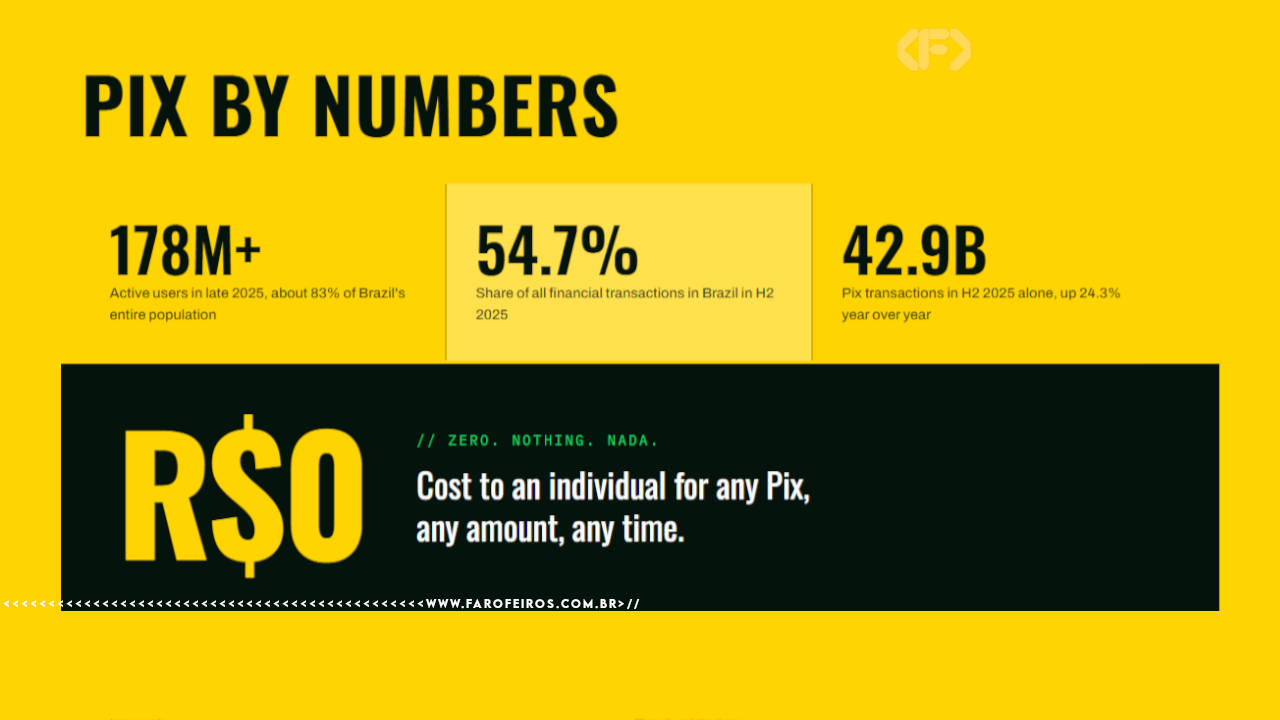
The numbers are hard to argue with: 178 million active users, roughly 83% of Brazil’s entire population. Over 54% of all financial transactions in the country. A world record of 313 million transactions processed in a single day in December 2025. And the fee for individual users: R$0. Nothing.
Compare that to Visa and Mastercard, which charge merchants between 1.5% and 4.5% per transaction, and the threat to the established order becomes obvious.
Why It Matters Now
The stakes are no longer just Brazilian. More than 50 countries have held active discussions with Brazil’s Central Bank about replicating the Pix model. Argentina, Uruguay, Paraguay, Chile, Peru, and Mexico already accept it. European expansion is underway.
Meanwhile, Apple publicly refused to support Pix por Aproximação, the NFC tap-to-pay version launched in February 2025, declaring it “not a priority for Brazilians.” The site points out the financial logic directly: Apple Pay takes a percentage of every tap payment it processes. Pix is universally free. There is nothing for Apple to extract, so the system is not worth supporting.
The US is building its own government-backed instant payment system, FedNow. The site notes the irony without belaboring it.
Who Built It
The project is independent and not affiliated with the Central Bank, any political party, or financial institution. It describes itself as “an independent editorial project explaining Brazil’s Pix revolution to the world and the geopolitical storm it triggered.”